Discover Longuyon
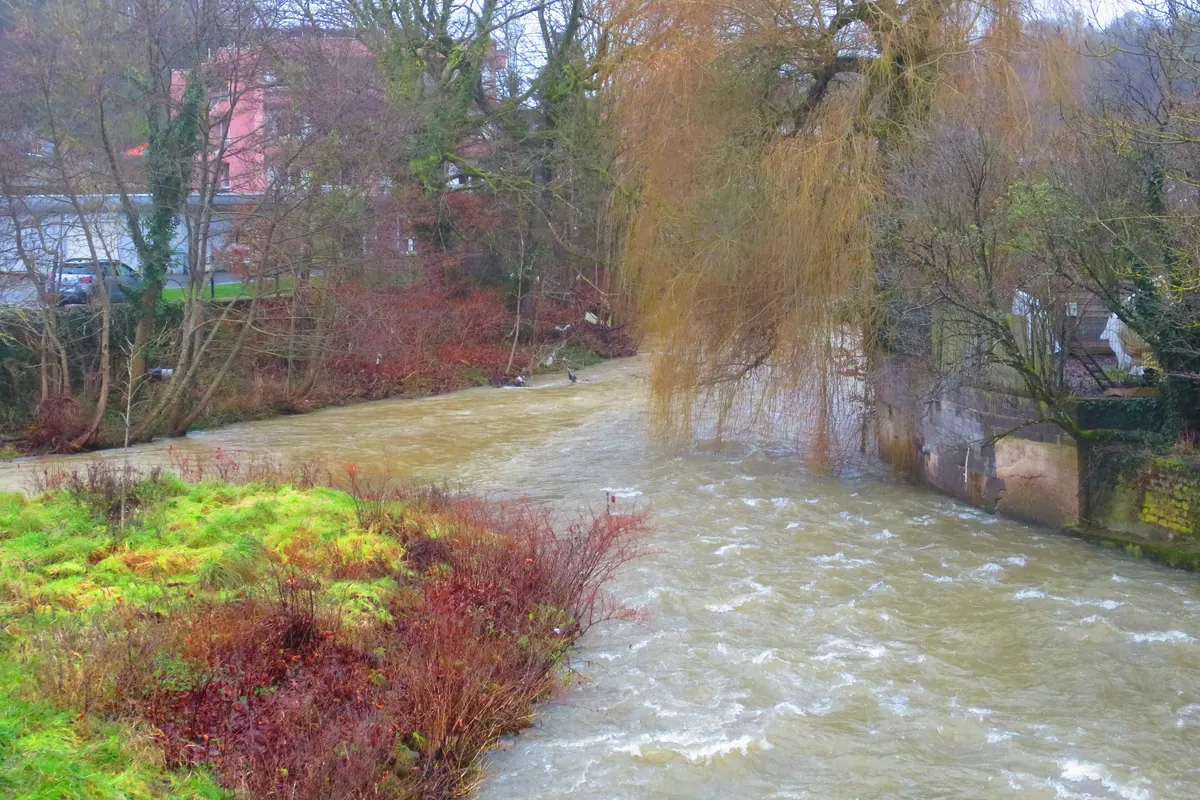
At the confluence of the Chiers and the Crusnes, a few kilometers from the point where France, Belgium and Luxembourg meet, Longuyon is a town in the Pays-Haut that iron and the railway have shaped.
Heritage
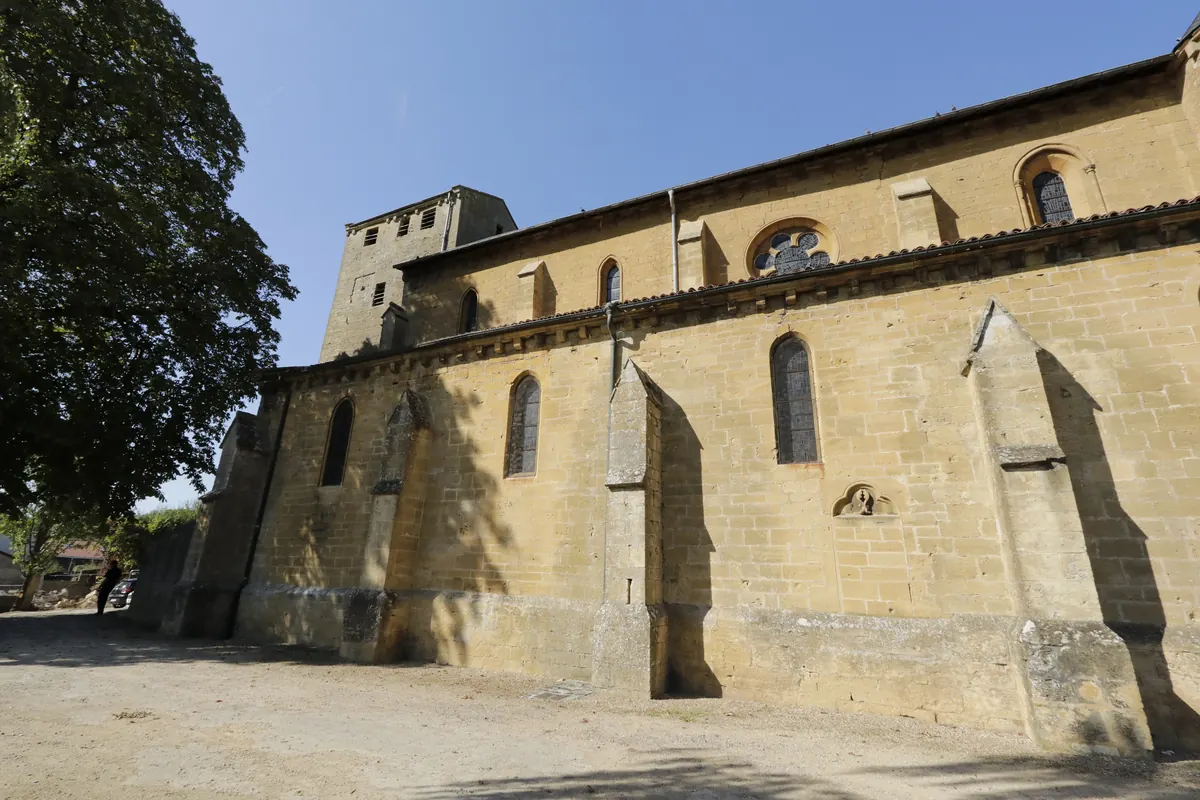
Sainte-Agathe church
It is the city's monument. Part of the current building dates back to the beginning of the 11th centurye century, on the site of an older chapel; the parishioners lifted the heavy square belfry which still dominates the neighborhood, and from which the tocsin could be sounded. The church was classified as a historic monument in 1875.
Former priory turned collegiate, it still bears traces of its defensive function, including a bretèche above the western portal. The cemetery which surrounded it was surrounded by a thick wall where the inhabitants came to take refuge.
Industry and railway workers
Iron and rail
The exploitation of iron is very old here: the Buré-d’Orval forge, founded by the monks of Orval, is mentioned as early as 1416 and was abandoned in 1691 in favor of the Dorlon furnace, better supplied with charcoal. This is the kitty Lorraine, the iron ore of the Haut Pays, which has sustained the region for centuries.
Then came the rail. The station is located in 1854 with the opening of the Longuyon-Longwy line; a first steam locomotive was named “Longuyon” in 1856. The lines to Audun-le-Roman, Baroncourt then Nancy followed, and Longuyon became a railway junction. Before 1914, out of 3,000 inhabitants, 1,800 belonged to the railway family, and the large depot accommodated up to 80 locomotives. In 1955, the electrification of the Valenciennes-Thionville artery reached the city.
The Tourist Office is also set up in an old SNCF car, Place Salvador-Allende: in Longuyon, we call it “the Wagon”.
Memory and landmarks
What the territory tells
August 1914
War comes early and brutally. German troops invest Longuyon on August 10, 1914, withdrew, then an entire army entered the city on August 23. The city, which then had around 2,300 inhabitants, was devastated and civilians were executed.
The canton's war memorial, the Lamy barracks and the commemorative plaques scattered throughout the town keep traces of this century of bordering.
A border town
Longuyon adjoins the tripoint where France, Belgium and the Grand Duchy of Luxembourg meet – a position which explains as much its military history as its border work habits today.
The city is twinned with Pirna in Germany, Żary in Poland and Walferdange in Luxembourg.
Sources: Longuyon city website (Heritage pages), INSEE for legal populations, database of historical monuments - details on the page credits & sources. Practical information is evolving: check times and conditions with the official sites.